The overarching goal of NURTURE is to quantify the impact that perturbations poleward of the jet stream have on jet stream variability and High Impact Weather (HIW). NURTURE will provide the first mesoscale observations of antecedent tropopause structure and near-jet environment that lead to HIW. Antecedent dynamics that will be targeted include Tropopause Polar Vortices (TPVs), dynamics supporting jet superpositions, mesoscale stratosphere-troposphere interactions, and diabatic processes.
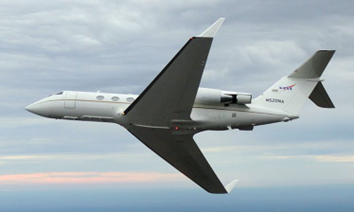
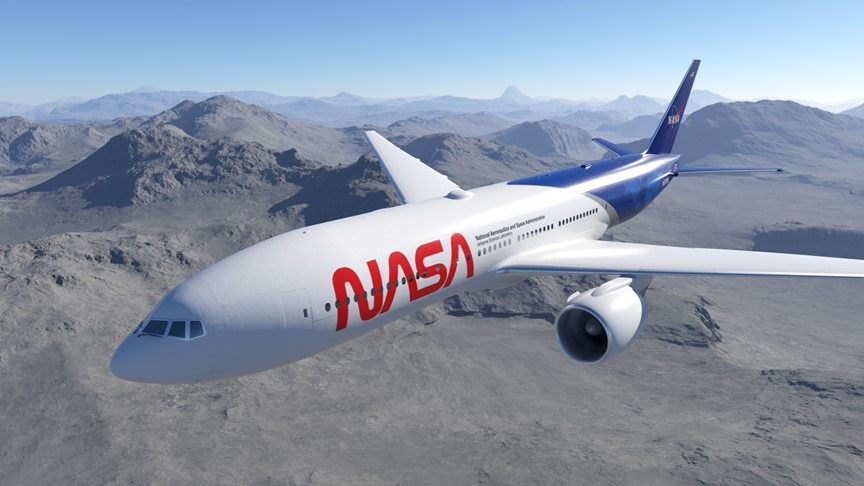
There are two planned aircraft deployment periods during NURTURE with two aircraft. Flights during the winter of 2026 deployment will take place during a 4-week period in January–February with the NASA Langley G-3 (pictured bottom left). Flights during the winter of 2027 deployment will take place during a six-week period in January–February with the NASA Boeing 777 (pictured bottom right). The winter 2027 deployment with the NASA 777 will be the first-ever mission of the NASA 777!
The science objectives are to advance the knowledge of:
- (1) Processes that control upstream perturbations to the jet stream, such as tropopause polar vortices (TPVs), dry air intrusions, turbulence, and interactions with jet stream,
- (2) Upper tropospheric and lower stratospheric influences on tropopause and jet stream, and
- (3) Boundary-layer processes that facilitate communication between the troposphere and surface and that precondition the environment for High Impact Weather (HIW) events.
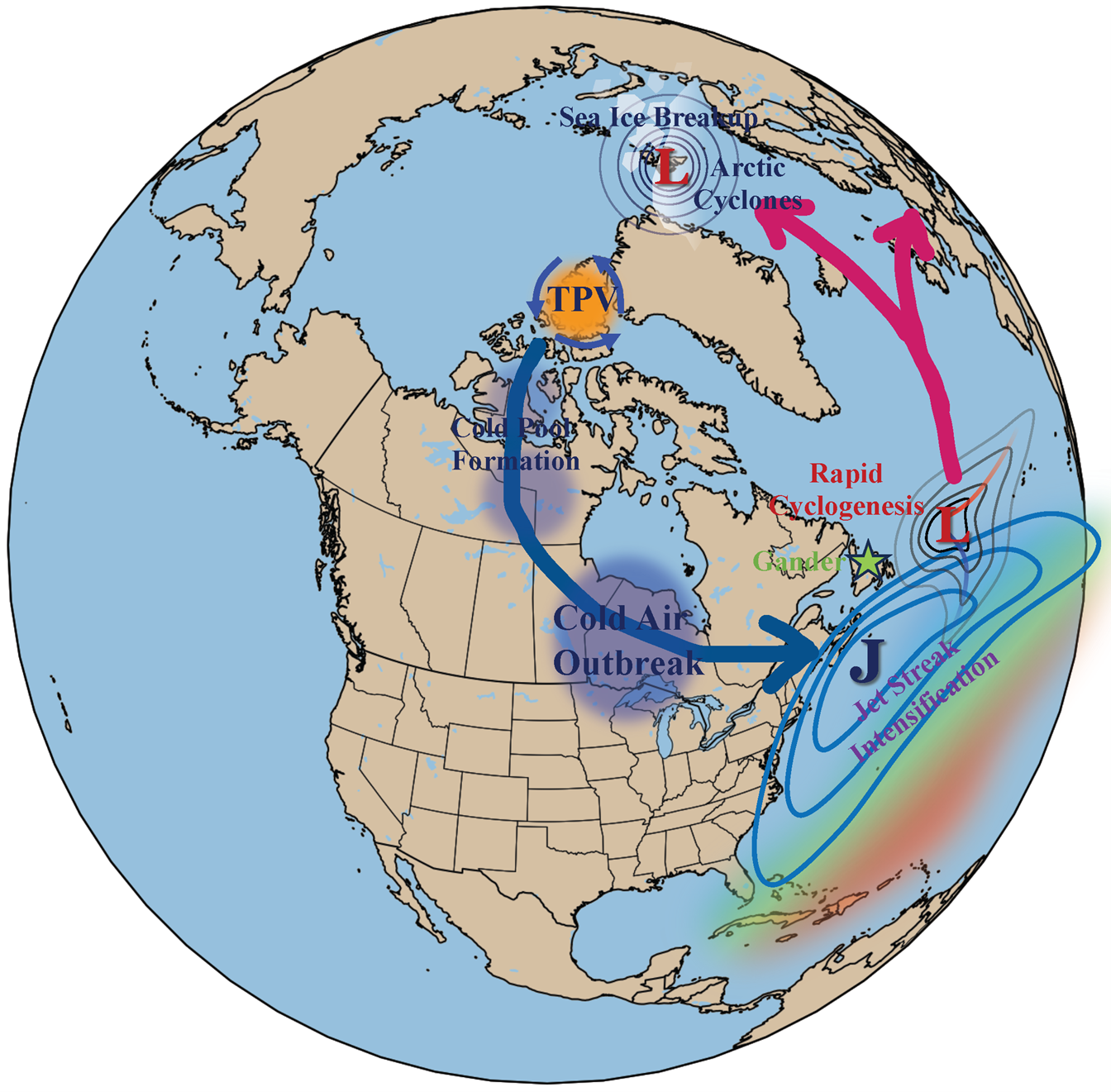 Figure: Conceptual schematic of an idealized TPV life cycle and impacts in the Northern Hemisphere. TPVs commonly form in northeastern Canada and can contribute to Arctic cyclone intensification, which can result in a decrease in sea ice extent. TPVs can then enter the midlatitudes, leading to various impacts, including cold air outbreaks, rapid cyclogenesis, jet streak amplification, and downstream Rossby wave initiation.
NURTURE is actively involved in an international coordination effort for an unprecedented hemispheric-wide intensive observing period in January-February 2026 with the following WWRP-endorsed projects:
NAWDIC ,
AR-Recon ,
SAFARI , and
PONEX. Such activities include planning, real-time communication in daily meetings and between contact points, complementary flight missions, additional dropsondes, suitcase flights, open data sharing, and additional radiosonde launches from ground sites. All projects above seek to quantify diabatic processes in relation to dynamics, reconcile observations of these processes with how prediction models treat them, and assess the implications of enhanced observations for increasing forecast confidence.
For mission details, visit:
» https://espo.nasa.gov/nurture/content/NURTURE  » NURTURE White Paper